
Previous
Featured - 2min read
The Business Lunch Tax
The hidden cost of client dinners, hospitality and professional drift
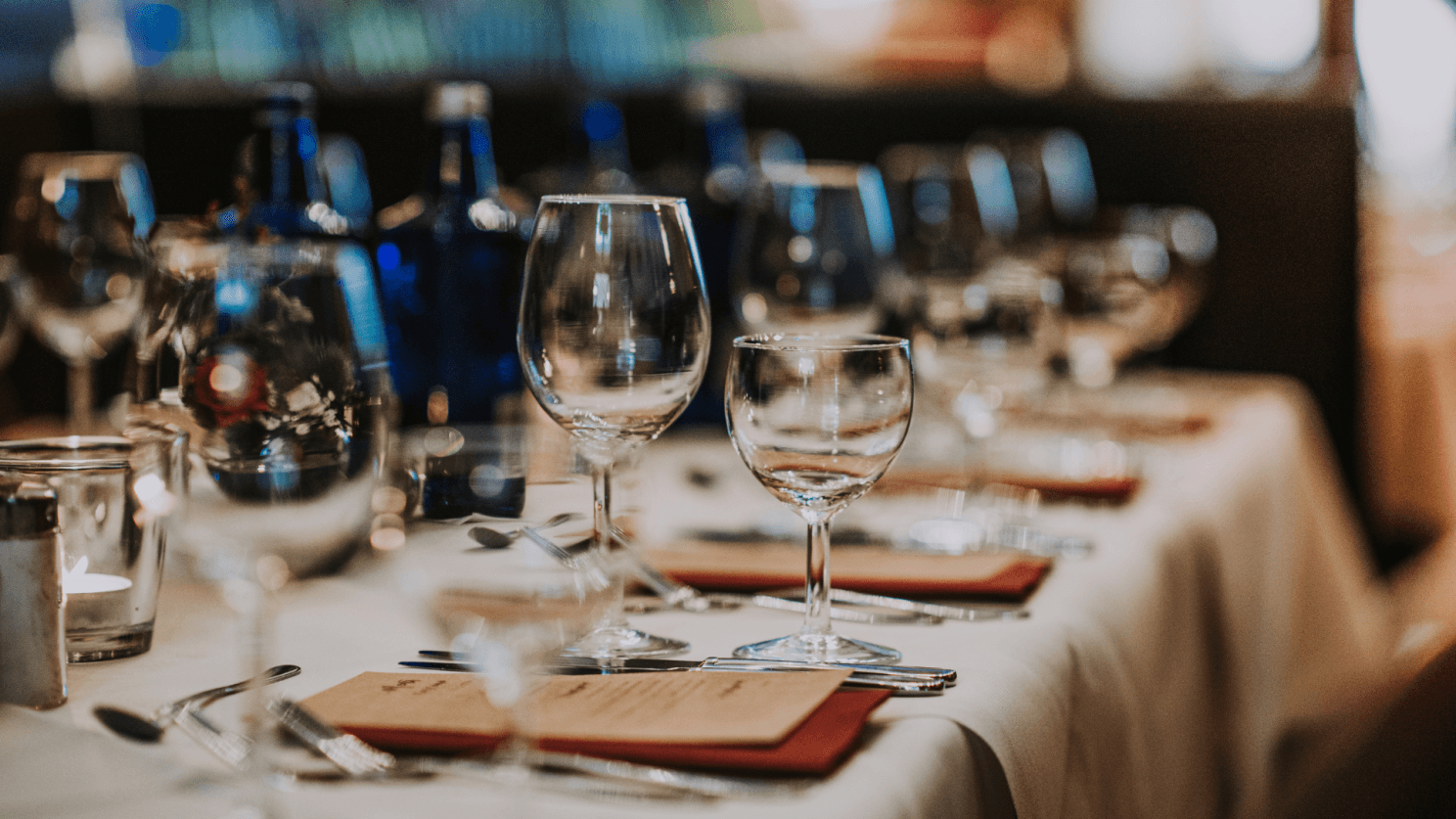
The healthiest choice on the menu is rarely the one the client expects you to order.
You know the scene. The restaurant is louder than you’d like, the waiter is hovering, somebody has already said, “Go on, let’s get a few things for the table,” and you’re trying to stay present in the conversation while doing mental maths on the menu. You want to come across as easygoing, switched on and professional. You also know that if you follow the table without thinking, you’ll feel it later.
And it’s rarely just lunch.
It’s the client dinner that somehow becomes three courses and a second bottle because nobody wants to be the first person to leave.
It’s the networking event where “just a couple” quietly turns into five miniature burgers, two glasses of wine and a sleep score that looks like a medical warning.
It’s airport lounges, hotel breakfasts, golf days, hospitality boxes and entertaining that slowly chip away at your health while still feeling professionally justified.
That’s the part most leaders over 40 don’t really talk about. Not the meal itself, but the small internal tug-of-war underneath it. One part of you wants to handle the meeting well, keep things smooth and avoid looking awkward. The other part knows that a heavy starter, a couple of drinks and whatever comes with chips and bits and bobs on the side isn’t neutral. It has a cost.
Business runs on relationships, yes. We’ve all heard that line. But somewhere along the way, “relationship building” became a convenient excuse for dropping standards that matter.
If the client orders the porterhouse and a bottle of Malbec, you feel the social pull. If everyone else is going large, ordering something simple can feel strangely rebellious. Like you’ve turned up to the meeting wearing a monocle and questioning modern banking.
So you pay the tax.
The Business Lunch Tax is the physical and mental cost of social convenience. It’s not just the extra calories. It’s the fog that turns a sharp afternoon into a slow one. It’s the meeting after lunch where your brain feels half a second behind. It’s the slow drift of your waistline, your energy and your standards, all dressed up as professionalism.
That’s the identity gap at the heart of this. You’re capable, disciplined and commercially savvy in most areas of life, but in this setting you hand your standards over to the room. You let the mood of the table decide what happens next.
And for a lot of otherwise sensible leaders, this is one of the biggest leaks in the week.
The Myth of the "Polite" Choice
Most business leaders have a script for these situations, even if they’ve never said it out loud.
The script says: Don’t make it awkward. Go with the flow. Don’t be the boring one. Don’t turn dinner into a “health thing.”
So the order gets shaped less by what you actually want and more by what seems socially acceptable in the moment. That often gets dressed up as being relaxed, adaptable or professional.
In reality, it’s usually just reactivity with a nice blazer on.
Here’s the truth. Nobody important is sitting there analysing whether you had the burger or the sea bass. They care about the quality of the conversation. They care whether you listen well, think clearly and move things forward. They care whether you’re useful company, not whether you matched them chip for chip.
When you eat for other people’s comfort, you’re not really being polite. You’re letting outside noise override your own health.
And that’s the bit that should bother you.
If you run a business, lead a team or manage serious responsibilities, you already understand operational standards. You wouldn’t let a client casually rewrite your P&L over lunch. You wouldn’t let a supplier decide your hiring process because they seemed persuasive over a starter.
You protect the boring stuff because the boring stuff keeps the business healthy.
Your nutrition is no different.
It doesn’t need to be extreme or performative. It just needs to hold when life gets noisy.
Because a booking in the diary is not a valid reason to abandon your operating system.
The Hidden Cost of "Drift"
I see this pattern a lot with leaders over 40.
The week usually starts with decent intentions. Training is in the diary, food at home is reasonably organised, and there’s at least some sense of structure. Then an “important” lunch, dinner or networking event lands somewhere in the middle of the week, usually in an environment where the portions are oversized and the social cues are louder than your common sense.
Nothing too crazy happens in the moment, which is precisely why drift is so easy to miss.
You have the bread because it’s there. You order a drink because everyone else is drinking. The heavier option suddenly feels easier than making a separate decision under pressure. By the end of the meal, you’ve convinced yourself it’s all fairly harmless anyway and nothing out of the ordinary.
But the effect usually shows up later.
Sometimes it’s the mid-afternoon fog where your brain feels half a second behind everything. Sometimes it’s poor sleep after a heavy dinner and a couple of drinks that were never really planned in the first place. Sometimes it’s simply waking up flat the next morning, skipping training, eating reactively and telling yourself you’ll get back on track next week.
That’s how drift tends to work in real life. Not through one spectacular blowout, but through a series of small, socially acceptable compromises that gradually lower the standard for the rest of the week.
And because all of it happens in professional settings, it rarely feels irresponsible while it’s happening. In fact, most people convince themselves it’s simply part of doing business.
The problem is that your body doesn’t really distinguish between “important client entertaining” and poor recovery decisions. Your body still pays the bill either way. Less energy. Worse sleep. More reactive eating. Less consistency. A slower, leakier version of yourself operating through the second half of the week.

The Business Twist
The mistake is treating these situations as though they somehow sit outside your normal standards.
Client dinners, networking events and hospitality become framed as exceptions to the rule, as though the normal operating system temporarily no longer applies. But if you stepped back and applied the same logic to business itself, it would sound absurd.
Imagine a leadership team saying: “We’re normally disciplined with cash flow, apart from when the atmosphere gets lively.” Or: “We generally protect margins well, but if somebody charismatic orders first, we tend to lose all structure.”
The reason that sounds ridiculous is because experienced operators understand that small leaks compound over time. Standards matter most in noisy environments, not least.
Health works in much the same way.
The important question is rarely, “What’s the healthiest thing on the menu?” It’s usually something more practical than that: “What decision allows me to enjoy this environment without paying for it physically for the next two days?”
That is a far more useful frame for busy professionals because it shifts the focus away from perfection and towards operational quality.
Most experienced leaders already think like this in every other part of life. They understand trade-offs, compounding effects, risk management and maintenance. They just don’t always apply the same thinking to themselves when food, alcohol and social pressure enter the room.
Handling the Table (Without Making It Weird)
You don’t need to become difficult. You don’t need to announce a nutrition philosophy over sparkling water. And you definitely don’t need to bring chicken and rice in a container like you’re preparing for a regional bodybuilding qualifier in Mayfair.
You just need a simple framework that removes friction before the moment arrives.
Pre-order scan
Never let the first time you see the menu be when the waiter is standing over your shoulder and everyone else is deciding quickly. That is exactly when people default to the heaviest, easiest or most socially safe option. A two-minute scan before you leave the office puts you back in a cold, logical state. You decide once, properly, and remove the need for willpower later.
Order first
This sounds small, but it changes the table dynamic. Most groups are more suggestible than they realise. If you calmly order something straightforward, protein-based and not ridiculous, you often make it easier for everyone else as well. If you wait until three people have ordered burgers, chips and a shared side of onion rings, your sensible choice suddenly feels like a statement. Go first and it just feels normal.
Default adjustment
This is where simple rules beat motivation. If the menu is a bit of a minefield, keep the structure and clean up the extras. Protein and veg first. Double greens instead of chips or mash if that option exists. Sauce on the side. Skip the starter if lunch is more about the meeting than the meal. None of this is dramatic. It’s just maintenance.
Drink pivot
This catches a lot of people out because it feels more social than food. “Shall we get a bottle?” sounds harmless, but that’s often where standards slip fastest. If you don’t want a drink, don’t turn it into a speech. A simple “Not today, I’ve got a heavy afternoon,” is usually enough. Then move the conversation on. Most people follow the confidence, not the liquid.
And if the venue is poor, use Plan B instead of pretending you’ve got no options. There is nearly always a version you can work with. A burger without the bun. Fish with veg. Chicken with the coating left behind if needed. It won’t be perfect, but perfect is not the standard. Holding the line is.
That’s the practical framework in real terms:
Decide before you arrive.
Order early if possible.
Build the meal around protein and greens.
Keep drinks intentional.
Use Plan B when the options are rough.
Not because you’re trying to be virtuous, but because structure beats mood. Every time.

Relationship Building vs. People Pleasing
There is a difference between being a good host and being easy to steer.
A lot of professionals convince themselves they need to match the table to build rapport, but most experienced clients care far more about the quality of the conversation than whether you ordered the steak and a second bottle of red.
I’ve had clients worry that not drinking heavily or ordering differently would make them seem dull or difficult. In reality, they were usually sharper, more present and far more useful in the actual meeting. They also stopped arriving home feeling like they’d just survived a stag weekend disguised as “networking.”
That’s the real distinction.
The goal isn’t to become obsessive or socially awkward. It’s simply to stop outsourcing your standards to the mood of the room. Strong business leaders are respected because they have standards in every other area of life. Health should sit in the same category.
The professional move is not blindly copying the table. It’s managing yourself well enough that you can still operate properly after the event is over.
Standards That Survive the Real World
A lot of health advice only works in perfect conditions.
But real life includes airport lounges, client dinners, networking events, delayed trains, poor sleep and weeks where the diary seems actively hostile to good decision-making.
That’s why standards matter more than motivation.
Drift rarely arrives with a bang. More often, one dinner becomes a few drinks, the poor sleep leads to a skipped workout, the skipped workout leads to reactive eating, and before long you’re promising yourself another reset on Monday.
None of the individual decisions feel disastrous in isolation. The problem is the cumulative effect they create over time.
Which is why the useful question is rarely: “Can I be good at this meal?”
A better question is: “What will keep me functioning well tomorrow?” “What standard still holds, even in a chaotic week?”
Because perfection isn’t really the goal.
The goal is building a way of eating and operating that survives real professional life, including the parts involving Malbec, steak dinners and all the nibbles “for the table.”
The deal is still in the conversation.
But your energy, your waistline and your long-term health are often sitting there in the order.

Where is the drift happening for you?
Take a look at your calendar for the next fortnight.
How many lunches, dinners, networking events or “quick drinks” are already sitting in there? How many more will appear at the last minute?
Because this is usually where the drift begins. Not through big decisions, but through small compromises that become the norm.
The goal isn’t perfection. It’s building standards that still hold when work gets busy and the room gets noisy.